
By Asanatu Nuhu Mohammed

CLIMATE AND ENVIRONMENTAL ISSUES IMPACTING GHANA IN RECENT TIMES
Ghana was the first of the medieval trading empires in Western Africa, situated in what is now southeast Mauritania and Mali, between the Sahara, Senegal and Niger rivers. Ghanaians are believed to have originated from Nubia through the Sahara desert then south to the Gold Coast. This migration occurred on the Gold Coast between the 10th and 16th Century AD.
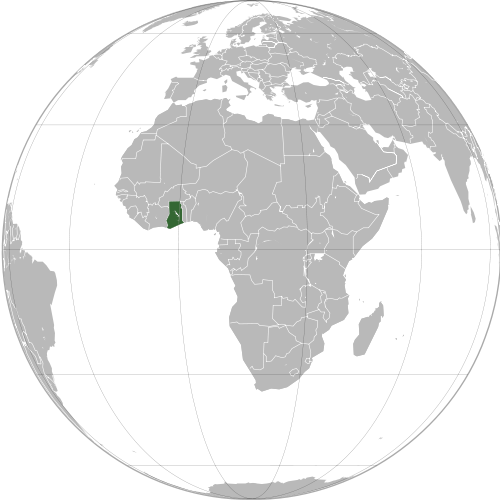
In 1957, Ghana gained independence from British colonial rule under the leadership of Kwame Nkrumah, becoming the first sub-Saharan African nation to achieve independence.
Dr. Kwame Nkrumah led the colony’s independence movement, believing that Ghana’s sovereignty was crucial for the continent of Africa as a whole as well as for the people of Ghana. He quoted “Our independence is meaningless unless it is linked up with the total liberation of the African continent”. Motivated by Ghana’s lead, over thirty additional nations declared their own independence within the next decade. Ghana, a country in Western Africa on the Gulf of Guinea coast is surrounded by Burkina Faso to the northwest and north, Togo to the east, the Atlantic Ocean to the south, and Côte d’lvoire to the west (Maier, 1966).
Over the years, Ghana’s population has experienced significant growth giving rise to the strain on its natural resources and contributing to environmental degradation. This population expansion, coupled with the effects of climate change, has intensified environmental issues in Ghana, including deforestation, land degradation, water scarcity, and increased vulnerability to extreme weather events like flooding and droughts.
Climate change simply refers to the significant and long term shift in regional and global climate patterns which are basically attributed to human activities specially emissions from greenhouse gases such as carbon dioxide which trap heat resulting warming effect known as greenhouse effect into the atmosphere.
The primary drivers of human influenced climate change include deforestation, industrial process, burning of fossil fuels among others.
In recent times, Ghana has been facing various impacts on climate change and environmental issues. Some of the key issues include the following:
Poor weather patterns. There has been an irregular rainfall pattern which has brought about droughts in some parts of the country leading to disruption in agricultural activities thus affecting livelihoods.
- Loss of biodiversity. Over-exploitation of natural resources and disrupting habitats have led to losing biodiversity in Ghana.
- Pollution. Improper waste management, pollution from industrial activities and urbanization has resulted to water and air pollution which affects human health adversely.
- Deforestation and land-use changes. Cutting down trees particularly in tropical regions reduces the strength of forest to absorb carbon dioxide. Also land-use changes such as urbanization and agriculture can release stored carbon dioxide into the atmosphere. Moreover, illegal logging, infrastructure development and agricultural expansion have also caused deforestation in Ghana.
Recommendations
- Engaging community and provision of education. Creating awareness about climate change and environmental issues through outreach programmes, education, and involving the community can foster behavioural change and enhance sustainable practices.
- Improvement in waste management. Implementing proper waste management practices such as composting and recycling can help protect water protect water bodies from being contaminated, reduce greenhouse gas emissions as well as pollution.
- Afforestation/ reforestation. Implementing large-scale afforestation and reforestation projects can help restore degraded landscape, reduce effects of land degradation and improve biodiversity.
- Governance and policy reforms. Enforcing mechanism as well as strengthening policies and regulations can help ensure better management of natural resources. Also, developmental activities can be carried out in a sustainable and environmentally responsible manner.
In summary, addressing climate change requires concerted efforts and global cooperation to adapt to climate conditions, reduce gas emissions, promote sustainable practices in various sectors such as transportation, agriculture and industries.